Choosing the right driveway material is a long-term decision that affects durability, maintenance, appearance, and overall cost. As we move into 2026, property owners are weighing asphalt and concrete more carefully than ever, considering rising material costs, climate impact, and longevity.
Both asphalt and concrete driveways offer distinct advantages, but the better choice depends on usage, budget, and performance expectations. This guide breaks down the key differences to help you decide which option makes the most sense for your property.
Understanding asphalt driveways
Asphalt remains a popular driveway material due to its flexibility, faster installation, and lower upfront cost.
Cost considerations
Asphalt driveways typically cost less to install than concrete. This makes asphalt appealing for property owners who want a functional surface without a high initial investment.
Durability and performance
Asphalt performs well in areas with fluctuating temperatures because it expands and contracts more easily. However, it is more susceptible to surface wear over time and may require periodic patching or resurfacing.
Maintenance needs
Routine maintenance is essential for asphalt. This often includes:
- Sealcoating every few years
- Crack filling to prevent water damage
- Occasional patch repairs
Property owners often rely on experienced asphalt contractors to keep asphalt surfaces in good condition and extend their usable life.
Appearance
Asphalt provides a clean, uniform look but offers fewer design options compared to concrete. Over time, it can fade if not properly maintained.
Understanding concrete driveways
Concrete driveways are known for their strength, longevity, and clean appearance.
Cost considerations
Concrete has a higher upfront installation cost, but it often delivers better long-term value due to its extended lifespan and reduced maintenance needs.
Durability and performance
Concrete is highly resistant to heavy loads and surface deformation. When installed correctly, it can last decades with minimal structural issues.
Maintenance needs
Concrete requires less routine maintenance than asphalt. Typical care includes:
- Occasional cleaning
- Sealing to protect against stains
- Minor crack repairs if settlement occurs
For properties with higher load demands, a commercial concrete contractor is often recommended to ensure proper thickness and reinforcement.
Appearance
Concrete offers more aesthetic flexibility. It can be finished in various textures and patterns, making it suitable for properties that prioritize curb appeal.
Asphalt vs. concrete: A side-by-side comparison
Installation time
- Asphalt can often be installed and ready for use faster
- Concrete requires a longer curing time before full use
Lifespan
- Asphalt typically lasts 15 to 25 years with regular maintenance
- Concrete can last 30 years or more when properly installed
Maintenance frequency
- Asphalt needs ongoing maintenance to prevent deterioration
- Concrete requires less frequent intervention
Climate impact
- Asphalt handles freeze-thaw cycles better initially
- Concrete performs well long-term, but must be properly installed to avoid cracking
Which driveway makes sense in 2026?
In 2026, the choice between asphalt and concrete is less about which material is “better” and more about how the driveway will be used.
Asphalt may be the right choice if:
- Budget is a primary concern
- Faster installation is needed
- Routine maintenance is acceptable
- Concrete may be the better option if:
- Long-term durability is a priority
- Heavy vehicle use is expected
- Lower maintenance over time is preferred
Evaluating total lifecycle cost rather than upfront expense is becoming increasingly important for property owners.
Long-term value and sustainability
Sustainability is playing a larger role in material decisions. Asphalt is recyclable and easy to repair, while concrete offers longevity that reduces replacement frequency. Both materials can be environmentally responsible when installed and maintained correctly.
The key is proper installation, base preparation, and drainage planning. Poor installation can shorten the lifespan of either material, regardless of quality.
Why choose us for your driveway project
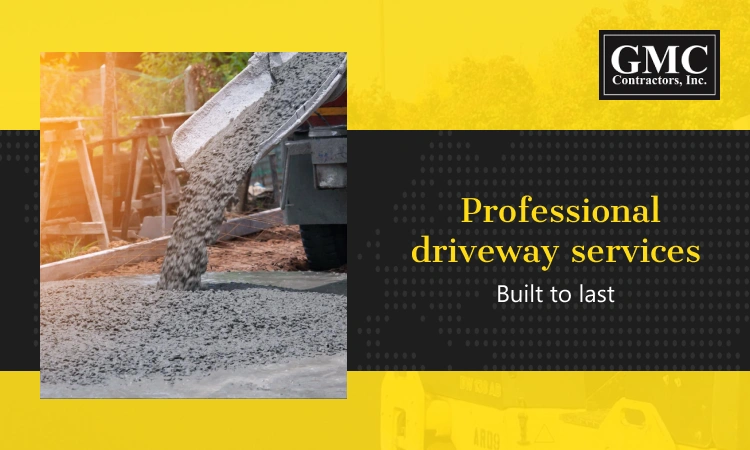
Choosing the right contractor matters as much as choosing the right material. GMC Contractors brings decades of experience in asphalt and concrete work, delivering durable surfaces built for performance and longevity.
Serving Millersville, Annapolis, Edgewater, Severna Park, Columbia, and surrounding areas across Maryland, Northern Virginia, and Delaware, we provide reliable solutions tailored to property needs. In business since 1995, our company is known for quality workmanship, in-house crews, and results that stand the test of time.
Are you planning a new driveway or replacing an existing one in 2026? Contact us today to discuss your project and get a solution built to last.
Frequently Asked Questions
1. Which driveway material lasts longer overall?
Concrete generally lasts longer than asphalt, especially when properly installed and maintained. Asphalt can still offer good performance, but requires more routine care.
2. Does asphalt or concrete handle heavy vehicles better?
Concrete typically performs better under heavy loads due to its rigidity and strength, making it suitable for frequent vehicle traffic.
3. How soon can a driveway be used after installation?
Asphalt can often be used sooner, while concrete requires adequate curing time before supporting full loads.
4. Which option has lower long-term maintenance costs?
Concrete usually has lower long-term maintenance costs, while asphalt requires periodic sealing and repairs.
5. Can weather affect the lifespan of a driveway?
Yes. Temperature changes, moisture, and drainage all impact performance. Proper installation helps both materials withstand environmental stress.