Compare temporary vs professional asphalt repairs and learn when each makes sense for your parking lot. Trusted commercial paving in MD, VA and DE since 1995.
Asphalt Repairs in Maryland
Every property manager eventually faces the same decision. A pothole opens up in the parking lot, a crack starts spreading across an access drive, or a low spot begins collecting water after every storm.
The question is rarely whether to fix it, but how. Do you patch it quickly to stop the immediate problem, or bring in a contractor for a lasting repair?
Both temporary and professional asphalt repair have a place in a well-run maintenance program. The trick is knowing which one a situation actually calls for.
Choosing wrong in either direction costs money, either through repairs that fail within months or through full-scale work on damage that a simple patch could have held. This guide breaks down:
- What’s the difference between professional asphalt repairs and temporary repairs
- When each makes sense
- How to protect the long-term value of the pavement you manage
What Counts as a Temporary Asphalt Repair
A temporary repair is a fast, low-cost fix meant to neutralize an immediate hazard. It buys time. It does not restore the structural integrity of the pavement, and it is not expected to last for years.
The most common temporary method is cold-mix patching.
Cold-mix asphalt comes ready to use, requires no heating, and can be applied in almost any weather, including the cold months when hot-mix plants are closed.
A crew shovels it into a pothole, compacts it, and the surface is drivable within minutes. For a property manager staring at a hazard that could damage a customer’s tire or become a liability claim, that speed is valuable.
Temporary repairs typically include:
- Cold-mix pothole patching to eliminate an immediate trip or vehicle hazard.
- Throw-and-go fills to hold a failing area until weather or budget allows a permanent fix.
- Quick surface patching over a spreading crack to slow water infiltration.
These fixes are inexpensive and immediate. The trade-off is durability.
Because a temporary patch does not address the base layer or the underlying cause of the failure, it tends to loosen, shift, or wash out over time, especially under heavy traffic and freeze-thaw cycles.

What Defines a Professional Asphalt Repair
A professional repair addresses the damage and the reason it happened. Instead of filling a hole, an experienced crew removes the failed material, inspects the base, and rebuilds the section so it performs like the surrounding pavement.
Professional patching and pothole repair usually involves:
- Saw-cutting a clean perimeter around the damaged area
- Excavating to a sound base
- Applying a tack coat for proper adhesion
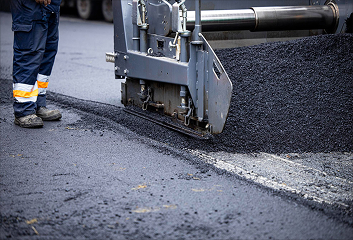
- Compacting hot-mix asphalt in layers
When cracks are the concern, professional crack filling seals them before water can reach and undermine the base.
Where the surface is sound but aging, sealcoating adds a protective layer against UV, oxidation, and moisture.
The result lasts. A properly executed professional patch bonds to the existing pavement, matches its load capacity, and holds up for years rather than months.
The Real Cost Difference
On paper, a temporary patch always wins on price. It is cheaper per repair and needs no scheduling around weather or plant availability.
But, single-repair cost and true cost are not the same thing.
Consider a recurring pothole patched with cold mix three or four times a year.
Each patch is cheap, yet the labor, the repeat site visits, and the eventual professional repair that becomes unavoidable often add up to more than a single proper fix would have cost at the outset.
Temporary repairs also do nothing to stop water from reaching the base, so the damaged area frequently grows underneath the surface even while it looks patched on top.
Professional repairs carry a higher upfront number but a lower cost per year of service. For a parking lot that represents one of the first things tenants, customers, and delivery drivers interact with, that longer service life protects both the asset and the property’s appearance.
When a Temporary Repair Is the Right Call
Temporary repairs are not a shortcut to avoid. Used deliberately, they are a smart part of asset management.
A temporary fix makes sense when:
- A hazard needs to be neutralized immediately for safety or liability reasons.
- Cold weather has closed hot-mix plants and a permanent repair must wait for spring.
- The budget cycle has not yet opened and an area needs to be held until funds are available.
- An event, delivery schedule, or tenant deadline requires a drivable surface today.
When to Invest in a Professional Repair
Certain warning signs mean a property has moved past the point where patching helps.
Bring in a commercial paving contractor when you see:
- Potholes that return in the same spot after repeated patching, a sign the base has failed.
- Alligator cracking, where interconnected cracks resemble reptile skin and indicate structural fatigue.
- Standing water or low spots that point to drainage and grading problems below the surface.
- Widespread cracking across a large share of the lot rather than isolated damage.
Building a Smarter Maintenance Strategy
The strongest approach is not choosing temporary or professional repairs once and for all. It is using each one where it belongs, guided by regular inspection.
Property managers who walk their pavement at least twice a year, in spring and fall, catch small cracks and soft spots before they spread, and they can plan permanent work during favorable weather instead of reacting to emergencies.
Quick steps for doing an asphalt inspection and maintenance:
- Inspect regularly and document new cracks, potholes, and drainage issues as they appear.
- Use temporary patches only to control immediate hazards, then log them for permanent follow-up.
- Schedule professional repairs during dry, moderate weather when hot-mix asphalt performs best.
- Protect sound pavement with sealcoating and timely crack filling to delay major repairs.
How GMC Contractors Can Help Property Managers in MD, VA and DE
Since 1995, GMC Contractors, Inc. has helped property managers across Maryland, Northern Virginia, and Delaware make the right call between quick fixes and lasting repairs. From emergency pothole patching to full-scale milling and paving, our team delivers commercial paving and asphalt services built to protect both safety and long-term value.
See the range of clients we support or browse completed projects in our Portfolio.
Contact us today to schedule a visit from a professional asphalt repair service.
Frequently Asked Questions About Temporary vs Professional Asphalt Repairs
1. How long does a temporary asphalt patch last?
It depends on traffic and weather, but most cold-mix patches hold for a few weeks to several months. They are designed to control a hazard, not to serve as a permanent solution, so plan for a professional repair as a follow-up.
2. Is a professional repair really worth the higher cost?
For most commercial properties, yes. A professional repair addresses the base and underlying cause, so it lasts for years instead of months and typically costs less per year of service than repeated patching of the same spot.
3. Can asphalt be repaired in winter?
Temporary cold-mix patching can be done year-round, including winter when hot-mix plants are closed. Permanent hot-mix repairs perform best in dry, moderate weather, so they are usually scheduled for spring through fall.
4. How do I know if my parking lot needs more than a patch?
Recurring potholes in the same spot, alligator cracking, standing water, and widespread cracking all point to base or drainage failure. These signal that professional repair or repaving, not patching, is the right step.
5. How often should I inspect my pavement?
At least twice a year, ideally in spring and fall. Routine inspections catch small problems early and let you schedule permanent repairs on your terms rather than as emergencies.